
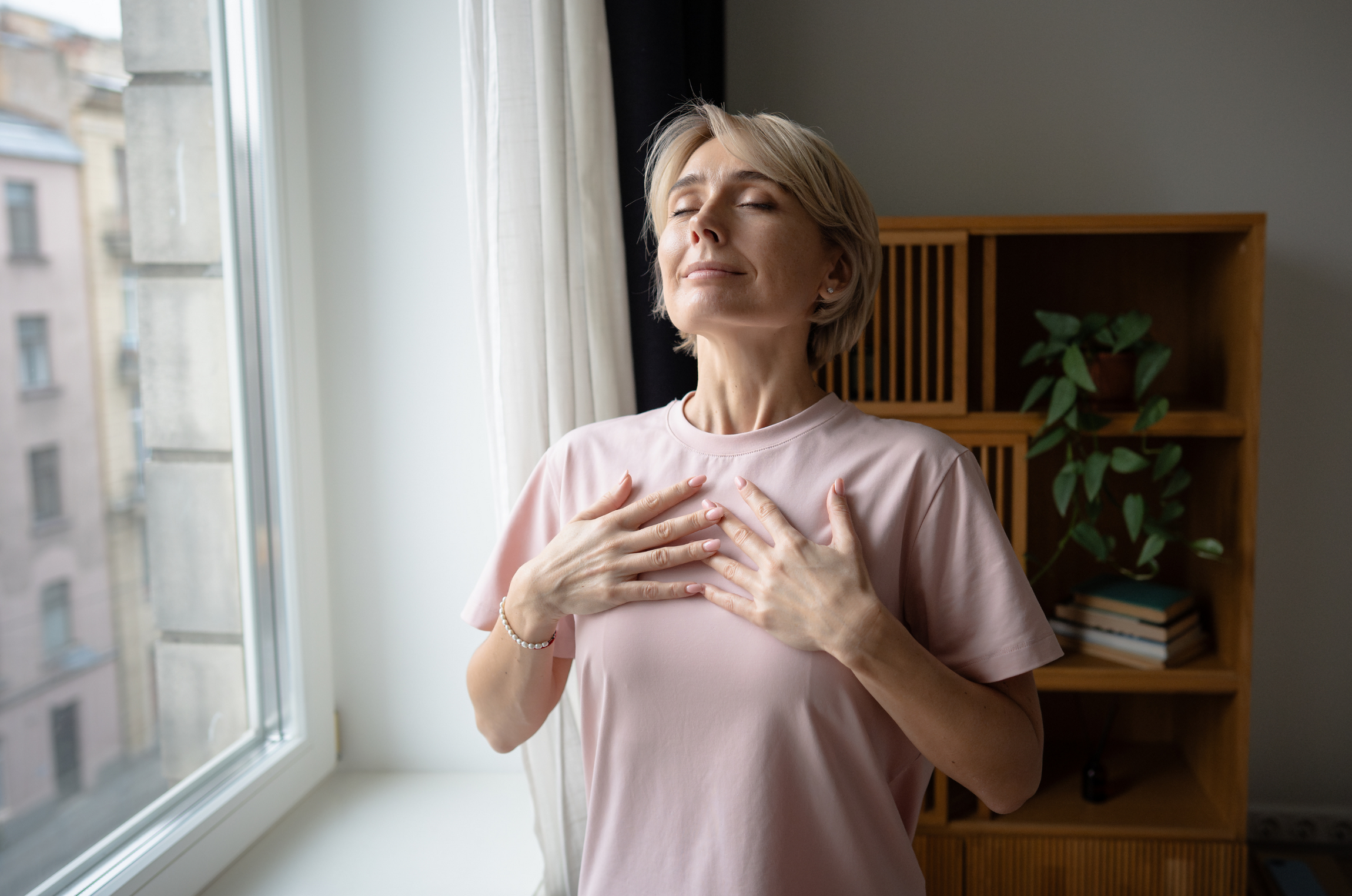
Your chest tightens. Your thoughts start looping. You know logically that nothing terrible is happening right now, but your body has not received that message yet. Anxiety does not wait for a convenient moment. It shows up in traffic, in meetings, at 3 AM, and in the middle of conversations that should feel normal.
If you have ever searched for how to deal with anxiety and found yourself overwhelmed by advice that ranges from "just breathe" to a 90-day meditation course, you are not alone. What most people need is a practical set of tools, things that work in the moment and habits that lower the baseline over time.
Here is an anxiety coping toolkit grounded in research from cognitive behavioural therapy, neuroscience, and lifestyle medicine. Not everything will work for everyone. The goal is to find the tools that fit your life and build from there.
Key Takeaways
- Anxiety has physical, mental, and behavioural components. The most effective approach uses tools that address all three.
- Body-based strategies like breathing exercises and grounding techniques can calm anxiety within minutes.
- Cognitive tools like worry time and thought restructuring help with the overthinking and catastrophising that keep anxiety going.
- Lifestyle factors, especially sleep, exercise, and caffeine intake, have a measurable effect on how anxious you feel day to day.
- Avoidance provides short-term relief but makes anxiety worse over time. Gradual exposure is the most evidence-supported behavioural strategy.
How Anxiety Affects Your Brain and Body
Anxiety is not just a feeling. It is a whole-body response. When your brain detects a threat, real or imagined, it activates the fight-or-flight system. Your heart rate increases, your muscles tense, your breathing becomes shallow, and the rational, problem-solving parts of your brain take a back seat.
The trouble is that for many people, this response fires too easily or too often. Over time, chronic anxiety can affect how well your brain handles memory, attention, and focus. Research shows that sustained stress increases reactivity in the amygdala (the brain's threat detector) while reducing activity in the prefrontal cortex, the area responsible for clear thinking and decision-making.
Understanding this helps explain why anxiety feels so physical and why the most effective coping skills for anxiety target the body, the mind, and the daily habits that shape both.
Body-Based Strategies for Anxiety Relief
When anxiety hits hard, your body needs the first signal that things are okay. If you are wondering how to calm anxiety quickly, these techniques work by activating the parasympathetic nervous system, the "rest and digest" system that counteracts the stress response.
Breathing Exercises for Anxiety
Controlled breathing is one of the fastest ways to calm anxiety. The key is making the exhale longer than the inhale, which directly activates the vagus nerve and slows the heart rate.
- Box breathing: Inhale through your nose for 4 counts, hold for 4 counts, exhale through your mouth for 4 counts, hold for 4 counts. Repeat four to six times.
- Extended exhale: If box breathing feels too structured, simply breathe in for 4 counts and out for 6 to 8 counts. The long exhale is what tells your body the threat has passed.
The 5-4-3-2-1 Grounding Technique
When anxious thoughts spiral, grounding brings you back into the present moment by redirecting attention to your senses.
- Notice 5 things you can see.
- Touch 4 things around you.
- Listen for 3 sounds.
- Identify 2 things you can smell.
- Name 1 thing you can taste.
The 54321 grounding technique works because anxiety lives in the future, in worst-case scenarios and "what ifs." Sensory awareness anchors you in the present, where the threat usually does not exist.
Progressive Muscle Relaxation
Tense each muscle group for five to ten seconds, then release and notice the difference. Start with your feet and work upward to your shoulders, jaw, and forehead. A single 15 to 20 minute session can reduce anxiety acutely, and regular practice may lower baseline tension over weeks.
Simple Physical Resets
Splashing cold water on your face activates the dive reflex, which rapidly slows heart rate. Rolling your head gently on your neck, shrugging your shoulders up and then releasing them, and pressing your tongue to the roof of your mouth to relax your jaw are small actions that release tension without anyone around you noticing.
Mind-Based Strategies for How to Stop Overthinking
Anxious thoughts have a characteristic pattern. They overestimate danger, underestimate your ability to cope, and repeat themselves on a loop. These cognitive tools help break that cycle.
Thought Restructuring
When a worried thought takes hold, ask yourself four questions:
- What evidence do I actually have that this will happen?
- What would I say to a friend who had this exact worry?
- What is the realistic best case, most likely case, and worst case?
- Even if the worst happened, could I cope with it?
The goal is not to replace anxious thoughts with positive ones. The goal is realistic appraisal, because anxious thinking is consistently biased toward threat.
Scheduled Worry Time
Set aside 15 to 20 minutes at a fixed time each day for worrying. When anxious thoughts arise outside that window, write them down and postpone them to the scheduled slot. During worry time, engage fully with each concern, either problem-solve or practise acceptance. Research shows this technique reduces total worry duration and teaches the brain that worry is something you can control, not something that controls you.
Naming The Emotion
Simply labelling what you feel, "I notice I am feeling anxious about tomorrow's meeting," engages the prefrontal cortex and reduces activity in the amygdala. Post-traumatic stress research has shown that people who describe their emotions verbally recover faster from threat responses than those who try to suppress them.
Lifestyle Foundations that Reduce Anxiety
Individual coping strategies work best when the foundation is solid. These daily habits have a measurable effect on how to reduce anxiety at baseline and are among the most underrated coping mechanisms available. A comprehensive review from Simply Psychology found that lifestyle factors can make or break the effectiveness of other anxiety tools.
Sleep
Sleep deprivation can amplify emotional reactivity in the brain by up to 60%, according to neuroscience research. Poor sleep makes anxiety worse, and anxiety makes sleep harder. Breaking this cycle starts with a consistent wake time, no screens for at least 30 minutes before bed, and a cool, dark room. For more on how sleep affects memory and Cognitive Function, a separate guide covers this in detail.
Exercise
Regular aerobic exercise has strong evidence for reducing anxiety across multiple conditions. The effect size is comparable to medication in some studies. Mechanisms include reduced cortisol sensitivity, increased GABA (a calming neurotransmitter), and improved sleep quality. Thirty minutes of moderate-intensity activity, four to five days a week, is enough to see meaningful effects.
Caffeine and Alcohol
Caffeine mimics anxiety symptoms by stimulating the sympathetic nervous system. Reducing intake to one or two cups before noon is often one of the simplest interventions. Alcohol reduces anxiety in the moment but reliably increases it the next day through rebound effects on brain chemistry. Regular use as a coping mechanism creates a worsening cycle.
Why Daily Mental Engagement Matters Alongside Coping Strategies
Anxiety does not just affect your emotions. Over time, it can affect how well your brain manages attention, flexibility, and memory. Building a daily habit of mental engagement, even a short one, helps keep those cognitive systems active and resilient.
The Ivory app offers a practical way to build this habit, with neuroscience-backed games designed to support focus and attention, a mood tracker, and mindfulness activities to help you decompress. Regular engagement with varied mental tasks is not a treatment for anxiety, but it supports the broader cognitive resilience that helps your brain manage stress more effectively. Practices like meditation and yoga complement this well.
Conclusion
Anxiety is uncomfortable, but it is manageable. The most effective approach combines in-the-moment tools for the body, cognitive strategies for the overthinking mind, and daily habits that lower your baseline stress over time. Building your toolkit is not about finding one perfect technique. It is about having the right tool for the right moment. If you are noticing that stress and anxiety are affecting your focus, memory, or ability to think clearly, a Cognitive Assessment can help you understand where your brain stands today and what areas may benefit from attention.
Note: The information in this blog is for educational and informational purposes only. Nothing here should be taken as medical or mental health advice. If anxiety is significantly affecting your daily life, please speak with a qualified healthcare provider or mental health professional.
Frequently asked questions
What are the most effective coping skills for anxiety?
The most effective approach combines body-based techniques (like controlled breathing and grounding), cognitive strategies (like thought restructuring and scheduled worry time), and lifestyle changes (like regular exercise, good sleep, and reduced caffeine). Research from cognitive behavioural therapy consistently shows that matching the tool to the type of anxiety, whether physical, mental, or behavioural, produces better results than relying on a single technique.
How does the 54321 grounding technique work?
The 5-4-3-2-1 technique redirects your attention from anxious thoughts to present-moment sensory experience. You notice five things you can see, four you can touch, three you can hear, two you can smell, and one you can taste. Anxiety tends to live in imagined future scenarios, so grounding in the present moment disrupts the cycle.
Can breathing exercises really reduce anxiety?
Yes. Controlled breathing, particularly techniques that extend the exhale, activates the parasympathetic nervous system through the vagus nerve. Research shows that techniques like box breathing can lower heart rate, blood pressure, and subjective anxiety within minutes. The long exhale is the key mechanism.
How does exercise help with anxiety?
Regular aerobic exercise reduces anxiety through several mechanisms, including lowering cortisol sensitivity, increasing the calming neurotransmitter GABA, promoting the growth of new brain cells in the hippocampus, and improving sleep quality. Meta-analyses have found that the anxiety-reducing effect of regular exercise is comparable to medication in some studies.
What is the difference between normal anxiety and an anxiety disorder?
Normal anxiety is a temporary response to stressful situations and typically passes once the situation resolves. An anxiety disorder involves persistent, excessive worry that is hard to control and interferes with daily activities like work, relationships, and sleep. If anxiety is significantly affecting your daily life for an extended period, speaking with a healthcare professional is a good next step.
Can anxiety affect Cognitive Function over time?
Chronic anxiety may affect how well the brain handles attention, memory, and decision-making. Sustained stress increases reactivity in the amygdala while reducing activity in the prefrontal cortex, the area responsible for clear thinking. Managing anxiety and staying mentally engaged through daily habits can help support long-term Cognitive Health.
Sources
- Wygant, C., "7 Anxiety Hacks. How to Manage Stress and Worry in the Moment," MD Anderson Cancer Center, 2022. MD Anderson
- Simply Psychology Editorial Team, "The Anxiety Coping Toolkit. Evidence-Based Strategies That Actually Work," Simply Psychology, 2026. Simply Psychology
- Anxiety and Depression Association of America, "Tips and Strategies to Manage Anxiety and Stress." ADAA
- National Center for Complementary and Integrative Health, "Anxiety and Complementary Health Approaches." NCCIH/NIH


